
Can a diner chair survive breakfast rush without slowing the reset? For high-turnover restaurants, the right diner chairs are commercial-grade seats that fit the table, clean quickly, move without blocking aisles, and stay comfortable for the intended visit.
Which diner chairs are best for a high-turnover restaurant dining room?
The best diner chairs for a high-turnover restaurant are chosen by service model first and style second. A good chair supports the guest long enough, lets staff reset fast, protects the floor, and can be repaired before small failures become replacement orders.
Diner chairs should be chosen by turnover model before style
Diner chairs should match the pressure of the room. A breakfast diner needs light, wipeable restaurant chairs that slide easily and do not trap syrup at seams. A lunch cafe may value density and quick pull-back clearance. A casual grill with longer evening visits may need a wider seat, better back support, or a replaceable padded insert.
- Define the meal-period target: breakfast rewards fast resets, lunch rewards density, dinner rewards comfort, and late-night service rewards stain resistance.
- Set the dwell-time range: a 25-minute eggs-and-coffee visit needs a different chair than a 75-minute burger and dessert visit.
- Check the commercial basics: request seat height, seat width, overall width, overall depth, back height, chair weight, stacking limit, frame material, and floor-glide type.
- Read the warranty language: it should cover commercial restaurant use, not only residential dining rooms.
- Budget for repair: value chairs can work if parts are replaceable; premium chairs should justify cost through durability, repairability, warranty terms, or a clear design role.
Style still matters because diner tables and chairs shape expectations before the menu arrives. Chrome, laminate, bentwood, powder-coated metal, and vinyl each create a different room character. The mistake is separating that look from cleaning labor, chair noise, floor wear, and service clearance. The same caution applies to material choices that look dramatic but need operational scrutiny.
Restaurant furniture chairs should pass a staff test as well as a guest test
Restaurant furniture chairs should be tested by the people who move and clean them. Servers should pull the chair from a tight two-top. Bussers should wipe the seat, back, legs, and underside. Cleaners should check whether crumbs collect at welt cords, screw heads, open frame joints, or the gap between seat and back.
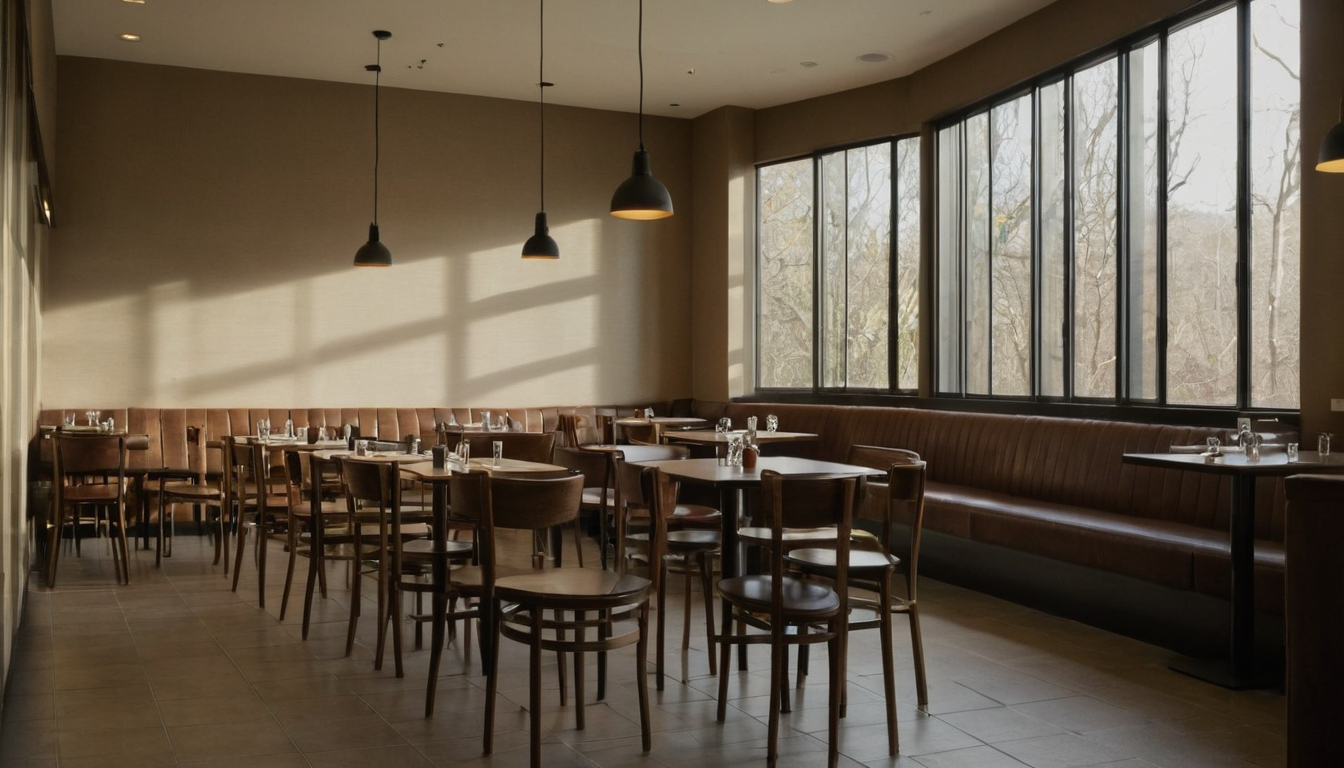
Which diner chairs are best for a high-turnover restaurant dining room shown with floor, wall, and fixture relationships visible.
Chair weight affects reset speed and fatigue. Metal and laminate chairs often move quickly but can scrape in hard-surface rooms. Wood restaurant chairs feel warmer but may show edge damage near table corners. Fully upholstered chairs extend comfort but add drying time, seam wear, and fabric care.
How do diner chair dimensions affect table density, aisles, and service flow?
Diner chair dimensions affect table density because width, depth, back angle, and pull-back space decide whether added seats become revenue or bottlenecks.
Diner tables and chairs must be measured as a working footprint
A chair specification sheet usually lists overall width and depth, but the dining room uses the larger footprint created when a guest pulls the chair back, sits, angles a knee, and hangs a coat or bag. A narrow seat can behave like a larger object once rear legs, back rake, and guest movement are included.
Measure each proposed chair in three positions: tucked under the table, occupied during service, and pulled back for a guest leaving. In many casual rooms, the occupied chair footprint often needs roughly 30 to 36 inches from the table edge before another chair back or service route becomes uncomfortable. The exact figure depends on chair depth, table base, aisle role, and guest mix.
- Risk: buying by seat width only. Result: adjacent two-tops collide when guests sit down.
- Risk: ignoring table base geometry. Result: pedestal, four-leg, and trestle bases change knee clearance and chair position.
- Risk: testing chairs only while empty. Result: the plan looks dense on paper but slows refills, pre-bussing, and check drops.
Aisle clearance decides whether added seats become real revenue
A dense plan earns money only if added covers do not block the host, servers, bussers, guests, restrooms, or emergency routes. Operators should map chair backs after guests are seated, not just table edges on a plan. A bus tub, high chair, mobility device, or server carrying hot plates can turn a narrow aisle into a daily pinch point.
Local accessibility, fire, building, and health rules control the final dining-room plan. For workplace safety planning, OSHA states that walking-working surfaces covered by its rule must be inspected regularly and as necessary, and maintained in a safe condition under 29 CFR 1910.22.
Seat height must match table height before color or finish is considered
Seat height controls comfort before upholstery color matters. Most commercial dining chairs sit around 17 to 19 inches high, while standard dining tables are commonly around 28 to 30 inches high. A practical target is about 10 to 12 inches between the seat and tabletop, with enough knee room for guests to sit without hunching.
Diner tables and chairs should be tested as a set: chair height, table apron, base spread, edge profile, and guest pull-back depth. Once the measured plan works, material choice becomes the next operational filter.
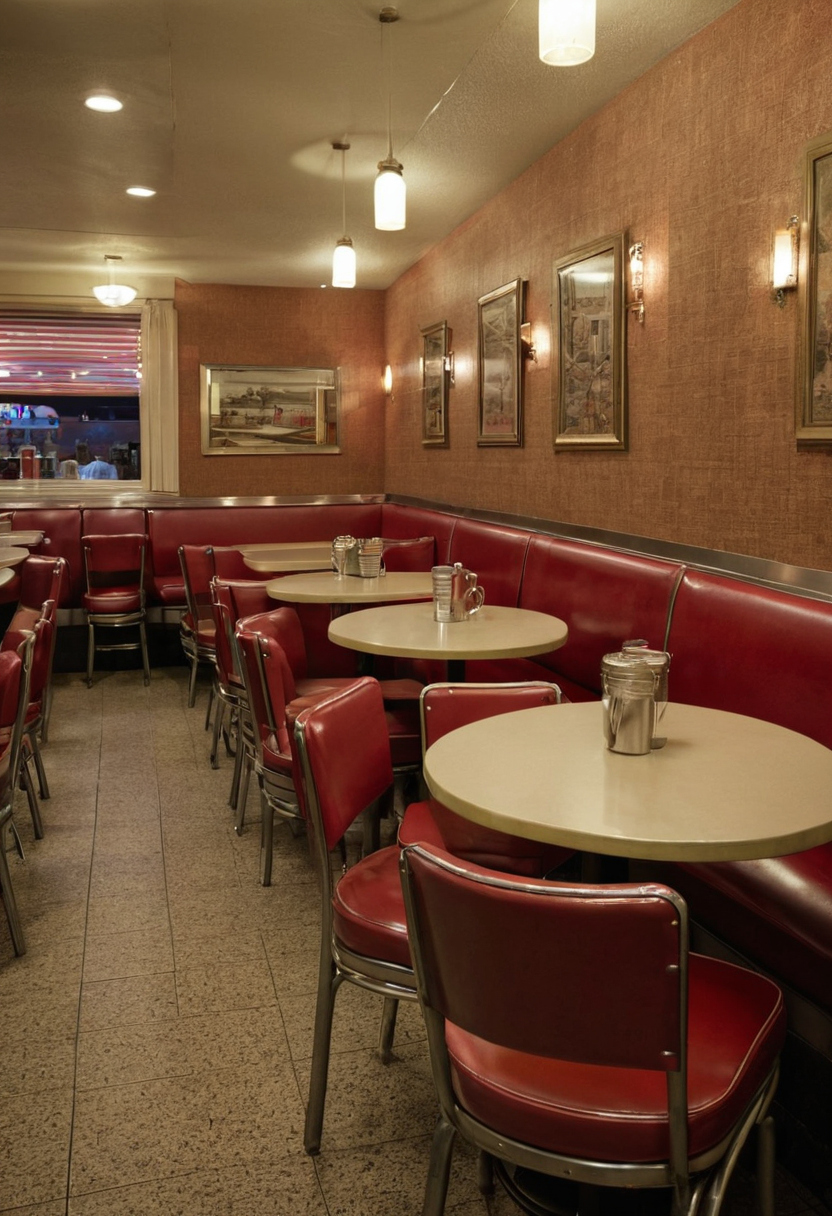
How do diner chair dimensions affect table density, aisles, and service flow shown as an editorial planning reference.
Which diner chair materials clean fastest and last longest in frequent-turn restaurants?
The fastest-cleaning diner chairs are smooth, non-porous, seam-light, and easy to move, but durability depends on finish quality, cleaning chemistry, and the replacement plan.
Vinyl diner chairs clean quickly when seams and edges are protected
Vinyl diner chairs suit breakfast counters, lunch diners, and family restaurants because coffee, sauce, grease, and syrup can be wiped from a coated surface faster than from woven fabric. Weak points include seams, welt cords, underside staples, and exposed cushion edges.
Operators should ask for the vinyl grade, backing type, approved cleaners, prohibited cleaners, and replacement-seat pricing. A replaceable pad is often more valuable than a thicker cushion that must be reupholstered off site.
Metal and laminate diner chairs reduce wipe time but can increase noise
Metal, chrome, powder-coated steel, molded shells, and laminate-back restaurant chairs reduce wipe time because staff can clean broad surfaces with fewer fabric traps. These materials work well near open kitchens, coffee stations, and quick-service counters where spills are frequent.
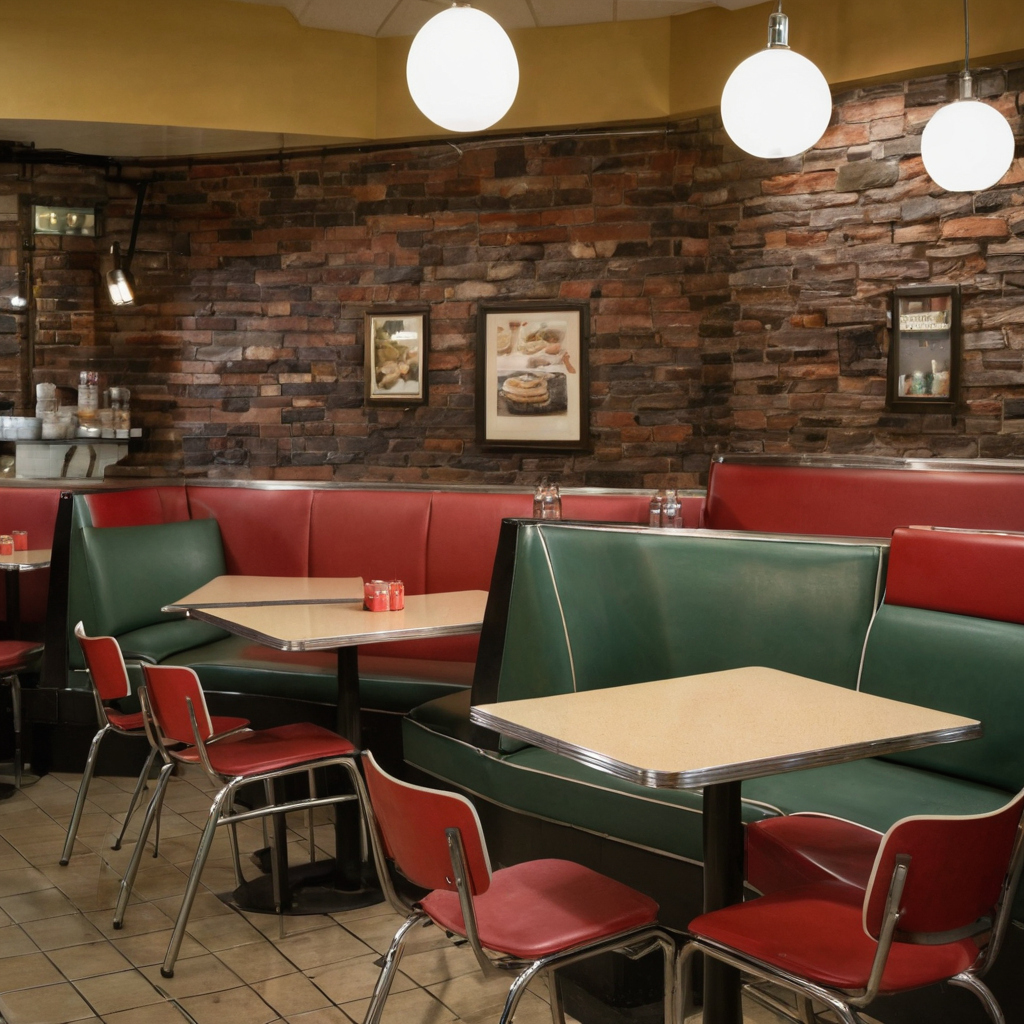
Which diner chair materials clean fastest and last longest in frequent-turn restaurants shown with practical context cues.
The tradeoff is sound. Metal legs on terrazzo, tile, polished concrete, or vinyl plank can turn every chair movement into a scrape during rush. Floor glides should match the flooring, not just the chair. Felt may quiet a room but collect grease and grit; nylon or rubber may last longer but still need inspection.
Upholstered restaurant chairs need a replacement plan before purchase
Upholstered restaurant chairs can support a warmer dining-room character and longer dwell time, but they slow cleaning when crumbs settle into seams or liquids reach foam. Upholstery belongs in zones where check average, visit length, and staffing justify more maintenance.
Fabric and coated-textile specifications should include stain resistance, moisture resistance, cleaning instructions, lead time for replacement cushions, and reupholstery options. Cleaning programs also need to protect nearby finishes. The Natural Stone Institute recommends neutral cleaners, stone soap, or mild liquid dishwashing detergent and warm water for natural stone surfaces, which matters when chair cleaning happens beside stone-topped tables.
How much comfort should diner chairs provide when table turns matter?
Diner chairs should be comfortable enough for the intended visit length, not so lounge-like that they slow the service model.
The most comfortable diner chair is the one that fits the visit length
A 25-minute breakfast table, a 40-minute lunch table, and a 75-minute casual dinner need different comfort levels. Quick-turn rooms benefit from upright posture, easy entry and exit, rounded front edges, and a seat that supports guests without encouraging a lounge posture.
Seat geometry matters more than padding alone. A dining seat should let most guests place feet securely, sit close to the table, and lean into a back that gives mid-back support without forcing a recline. Enough seat width helps families, older guests, and larger bodies feel accommodated, but every extra inch affects table density.
Foam density matters only with cushion construction and use case
Foam specifications should be read with cushion thickness, cover material, stitching, and expected daily covers per chair. Dense foam under tight vinyl can feel firmer than softer foam under woven upholstery, and a thin pad can bottom out even when the stated foam sounds durable.
Padded diner chairs need a replacement assumption before purchase. Operators should ask how the seat pad attaches, whether covers can be replaced without discarding the frame, and whether commercial testing claims match dining-room use.
What commercial specifications should operators require before buying restaurant chairs?
Operators should require written commercial-use specifications before buying restaurant chairs because residential-style seating often fails under restaurant frequency.
- Manufacturer specification sheet with seat height, overall width, depth, chair weight, frame material, and finish.
- Commercial-use warranty language, including duration, exclusions, claim procedure, and freight coverage.
- Stated weight capacity with the test method, not only a marketing number.
- Any claimed ANSI/BIFMA or comparable seating performance standard, with wording that shows whether the chair was certified, independently tested, or internally rated.
- Stacking limit, dolly requirement, and storage footprint for stackable diner chairs.
- Replacement-part list for glides, screws, cushions, shells, frames, and upholstery components.
- Manufacturer cleaning instructions and prohibited cleaning products.
Weight capacity claims need test context, not just a large number
Weight capacity matters only when the manufacturer explains how the number was established. A static load rating, a dynamic seating test, and an internal estimate do not mean the same thing in a room where guests sit, shift, lean, and sometimes rock a chair back on two legs.
Stacking diner chairs help events but can damage finishes
Stackable diner chairs suit private events and flexible rooms, but operators should ask how many chairs can be stacked, whether a cart is required, where frames touch, and whether contact points protect painted, chrome, wood, or vinyl finishes.
Glides, joints, and fasteners are small parts with large service consequences
Glides should match the restaurant flooring because the wrong glide can increase scraping noise, scratch floors, or slow resets. Joints and fasteners need a maintenance plan because loose screws, worn welds, and missing floor protectors turn chairs into service interruptions. Written specifications narrow the shortlist, but a sample-chair trial proves whether the claims survive rush service.
How should a restaurant test diner tables and chairs before placing a full order?
A restaurant should test diner tables and chairs with a sample set in the actual dining room before placing a full order.
A one-week chair trial should include opening, rush, and closing tasks
A sample order should include the supplier’s sample policy, return terms, lead time, freight cost, and finish warranty. One chair beside one table is not enough; operators need at least a working two-top or four-top so staff can see pull-back, passing, cleaning, and table-base interference.
- Place the sample diner chairs in the real dining room, not a back office.
- Photograph each chair tucked in, occupied, and pulled out from the table.
- Time a reset after coffee, syrup, sauce, crumbs, and a wet floor wipe.
- Ask servers, bussers, hosts, cleaners, and managers to note weight, snag points, noise, stacking, and table-base interference.
- Collect short guest comments from the intended customer segment, not only staff opinions.
The four-inch seating rule should be verified against real table geometry
The four-inch seating rule is a fit check, not a catalog slogan. Operators should confirm that seat height, tabletop height, underside, apron, edge profile, and table base allow comfortable knees and easy chair movement. If the chair fits on paper but catches on a pedestal base or traps knees under a thick apron, the dining room will feel tight during service.
What risks should be checked before installing diner chairs in a commercial dining room?
Diner chairs create risk when pulled-out seats block accessible routes, narrow exit paths, scrape floors, tip on uneven surfaces, amplify noise, or lack documentation required by local rules, lease terms, or insurers.
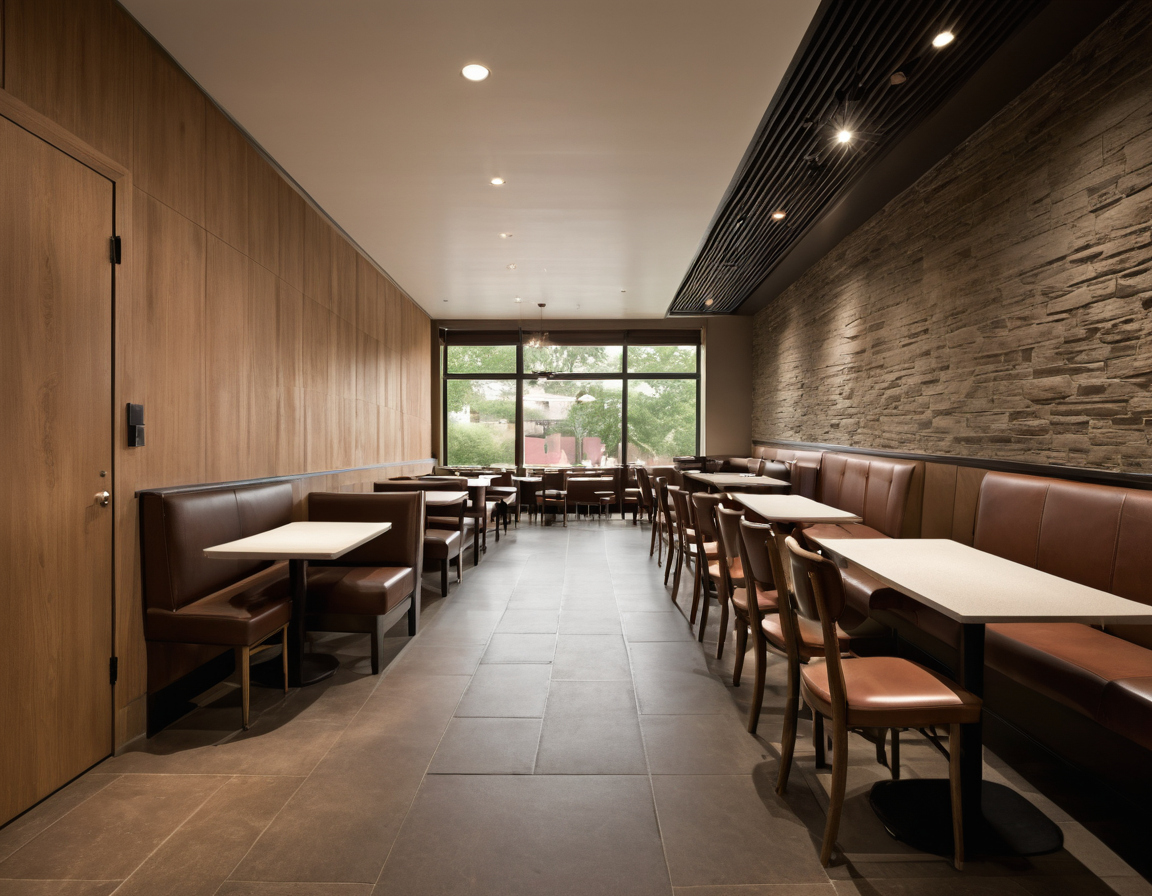
What risks should be checked before installing diner chairs in a commercial dining room shown as an editorial reference for proportion and finish coordination.
| Risk to check | What to inspect before installation | Operational consequence if ignored |
|---|---|---|
| Accessible routes and guest movement | Measure with guests seated, chairs pulled back, high chairs placed, and staff passing with trays. | A layout that looks workable on paper becomes blocked during lunch rush. |
| Egress and exit access | Confirm local building and fire-code requirements at banquettes, host stands, bar edges, and two-top rows. | Extra seats become unusable if pulled-out chairs constrict the route to exits. |
| Floor condition and slip risk | Check tile lippage, concrete slope, floor transitions, wet-entry zones, and chair-glide compatibility. | Unstable chairs, scratched floors, and noisy dragging increase complaints and repairs. |
| Cleaning and sanitation | Inspect seams, screw recesses, underside ledges, vinyl edges, and crumb gaps. | Reset time grows when bussers need detail cleaning after each cover. |
| Fire and material documentation | Request written fire-performance information for upholstered or padded seating where required. | A good-looking chair can delay opening or fail landlord review if documentation is missing. |
| Noise and room hardness | Test chair movement where concrete, tile, glass, metal ceilings, or stone surfaces reflect sound. | Chair scrape makes a dense diner feel harsher and pushes staff to speak louder. |
Accessibility and egress checks must happen after chairs are pulled out
Accessibility and egress reviews should use the restaurant’s real operating posture, not a neat furniture plan with every chair tucked in. A room changes once coats hang on chair backs, guests angle seats, servers stage trays, and a busser parks a tub beside a two-top.
Local accessibility rules, building code, fire code, and health department expectations control the final answer for a specific restaurant. Operators should ask the architect, code consultant, landlord, or local official to review the plan with diner tables and chairs shown in occupied positions.
Fire, slip, and acoustic risks depend on local rules and room materials
Fire-performance checks belong in procurement, not after delivery. Upholstered restaurant chairs, padded backs, and foam seats may need documentation under local code, lease language, or insurance review. Operators should keep specification sheets, upholstery details, cleaning instructions, and any required test documentation in the purchase file.
Indoor air and finish planning deserve the same attention. The U.S. Environmental Protection Agency identifies paints, varnishes, waxes, cleaning products, building materials, and furnishings as common indoor sources of volatile organic compounds, so large chair deliveries, refinishing work, or fresh upholstery should be coordinated with ventilation and off-hour installation where needed.
Floor protection is a daily cost issue. Natural stone, polished concrete, terrazzo, wood, vinyl plank, and tile each respond differently to chair glides and cleaning chemicals. Approve diner chairs only after the occupied layout is measured, glides match the floor, cleaning and fire documentation are filed, noise is tested, and local approvals are attached to the purchase documents.
FAQ
What kind of diner chair is most comfortable for a high-turnover restaurant?
The most comfortable diner chair for high turnover has correct seat height, a stable mid-back, rounded front edges, enough seat width for the guest mix, and a posture that supports dining without turning the table into lounge seating.
What foam density is best for padded diner chairs in a commercial dining room?
Foam density should be judged with cushion thickness, cover material, stitching, and daily use. Ask the manufacturer for the intended commercial application, replacement-seat cost, and cleaning compatibility rather than choosing by density alone.
What is the four-inch rule for dining chair and table fit?
The four-inch rule is a practical fit check that looks at the relationship between the chair seat and the table underside, apron, and edge. It should be verified with the real table base because pedestal and apron geometry can change knee clearance.
What should operators check before trusting a high weight capacity claim on restaurant chairs?
Operators should ask how the weight capacity was tested, whether the chair was tested for commercial use, what the warranty excludes, and whether the claim covers dynamic restaurant behavior such as shifting, leaning, and repeated daily use.
How many diner chairs can fit around a table without hurting aisle clearance and service flow?
The answer depends on chair width, pull-back depth, table base, aisle role, and local requirements. Test the table with chairs occupied and pulled out, then trace server, guest, restroom, and exit routes before adding seats to the plan.